Written by State Of The Art Smiles. Medically reviewed by Dr. Phillip Katz, DDS.
If you have called a few dental offices and asked, “So how much is an implant?” you have probably noticed that nobody gives you a straight number. That can feel evasive. It usually is not. Dental implants are not a single product with a single tag on it — they are a course of treatment built around one person’s mouth, and several different things go into what that treatment involves.
This post walks through those things honestly, so that when you do sit down for a plan, you understand what you are looking at and how to compare one office’s plan with another’s.
Why an honest number starts with an exam and 3D scans
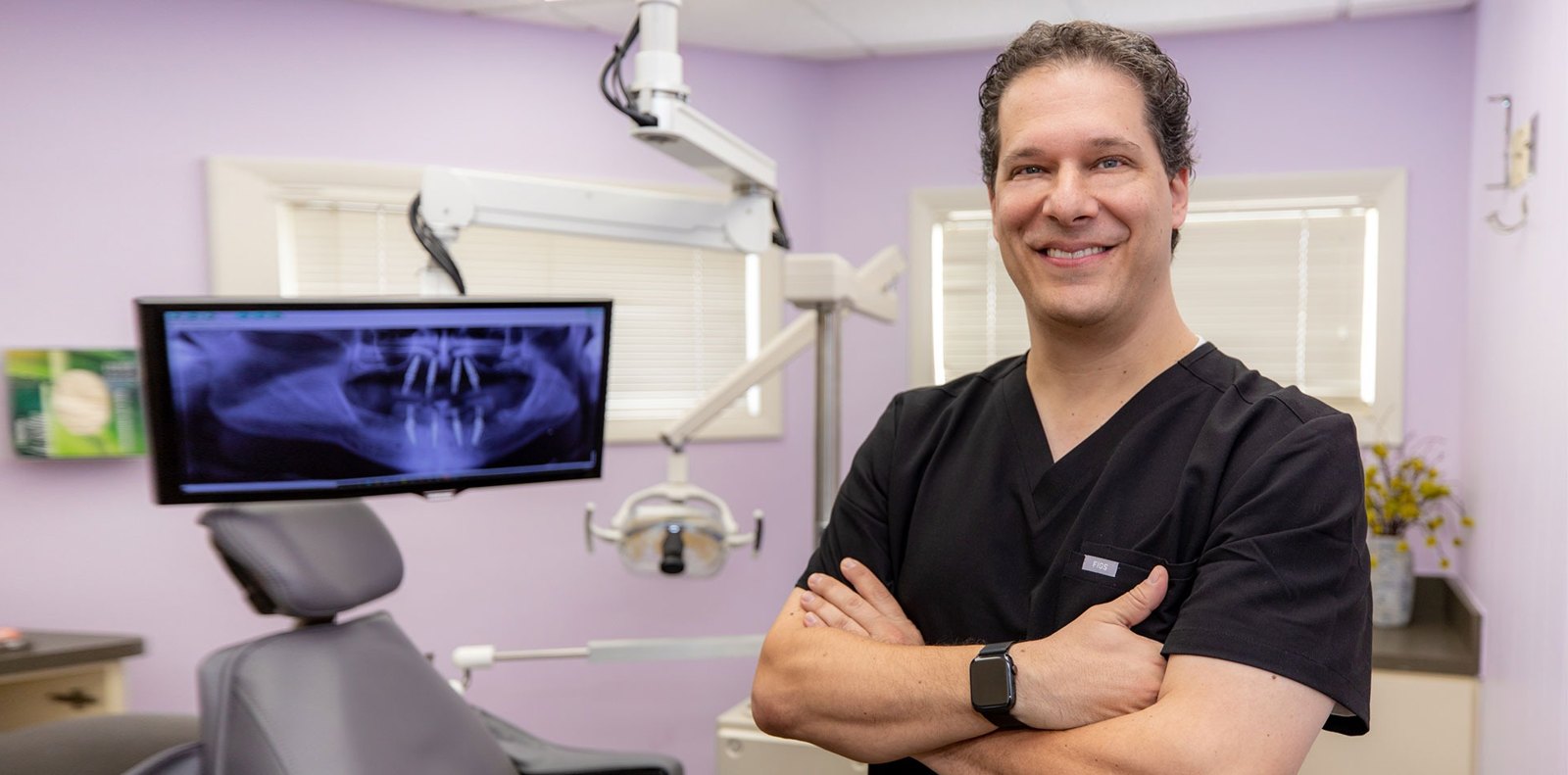
Two people can walk in asking for “an implant” and need very different treatment. A 3D scan shows what an exam alone cannot: how much bone is present and how dense it is, where the nerves and sinuses sit, whether a failing tooth has damaged the bone around it, and whether old dental work nearby is part of the problem.
A number quoted over the phone, before anyone has seen any of that, is a guess. It may leave out steps your mouth actually needs, which means it will change later. A responsible plan starts with looking — and for full-arch treatment, we now publish the figures: through November 30, 2026, one arch is $13,500 and both arches are $25,995; regular fees are $15,995 for one arch and $28,995 for both. See our dental implant cost page for current full-arch pricing and what is included.
How many teeth are being replaced
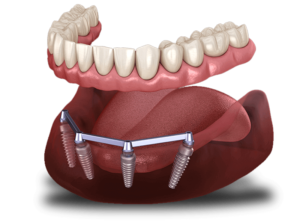
Scale is the first factor. Replacing one tooth means one implant, one connector, and one crown. Replacing several teeth can sometimes be done with a bridge supported by fewer implants than teeth. Replacing a full arch — all the upper or lower teeth — means a fixed set of teeth supported by several implants, as described on our dental implants page. Each step up adds components, lab work, and clinical time, so the scope of the case drives a great deal of the total.
The condition of your jawbone — and the work that comes first
Implants hold because they fuse with bone, so they need enough healthy bone to anchor in. If the bone in an area has shrunk after years without a tooth, or thinned after an infection, it may need to be rebuilt — a step called bone grafting — before or along with implant placement. Grafting adds procedures and healing time. A mouth with thick, healthy bone in the right places is a simpler case than one where bone has to be rebuilt first, and the scan is what tells us which situation you are in.
An implant plan rarely exists in isolation. Teeth that are broken down or infected may need to come out. Old crowns, bridges, or root canal treatments that are failing may need attention so that new work is not built next to a problem. Gum infection needs treatment before surgery.
Sometimes a failing tooth can be removed and an implant placed in the same visit; sometimes the area needs to heal first. Either way, these preparatory steps are part of the real plan, and a plan that quietly skips them tends to surface them later as complications instead.
The teeth themselves: design and materials
An implant-supported fixed bridge can replace several teeth or a full arch. All-on-4 and All-on-X are approaches to supporting a fixed full-arch restoration with multiple implants; they are not the opposite of a fixed bridge. Cost depends on the number of teeth being replaced, the treatment plan, and the final restoration.
Sedation, complexity, and redoing failed work
Comfort choices are part of the plan as well. For full-arch treatment, oral sedation is included in the fee; IV sedation is available for an additional fee. Complexity matters too: a straightforward first-time case is different from one involving difficult extractions, close sinus anatomy, or the removal and replacement of implants that were placed elsewhere and are now failing. Redo work takes more time and more care than a clean start, because the surgeon is correcting a situation, not just creating one.
How to compare offices fairly
Compare whole plans, not single lines. Ask every office for its complete plan in writing, and look at what is included: the surgery, the implant components, the final teeth, and the follow-up care. A lower quote sometimes turns out to be lower because steps your mouth needs were left out of it — and steps left out of a plan do not disappear; they tend to reappear mid-treatment, when changing course is hardest.
Many patients also choose to spread the cost of treatment over time through financing. Our office works with Cherry, Proceed, and Lending Club for patients who prefer that route.
The fairest comparison starts with a real diagnosis. Your consultation at State Of The Art Smiles is free, and it includes a 3D cone beam CT scan and a full panoramic X-ray. From those images we can build your actual plan and put it in writing, so you can weigh it against any other plan on equal terms. Call us at (614) 837-4506 to schedule. We are in Pickerington, just outside Columbus, Ohio.